Single Axle or Tandem? How to Pick the Right Utility Trailer for What You Actually Haul
The sticker price isn't the question. What you're hauling, how often, and what your truck can legally stop are.
September 2, 2026 · 4 min read
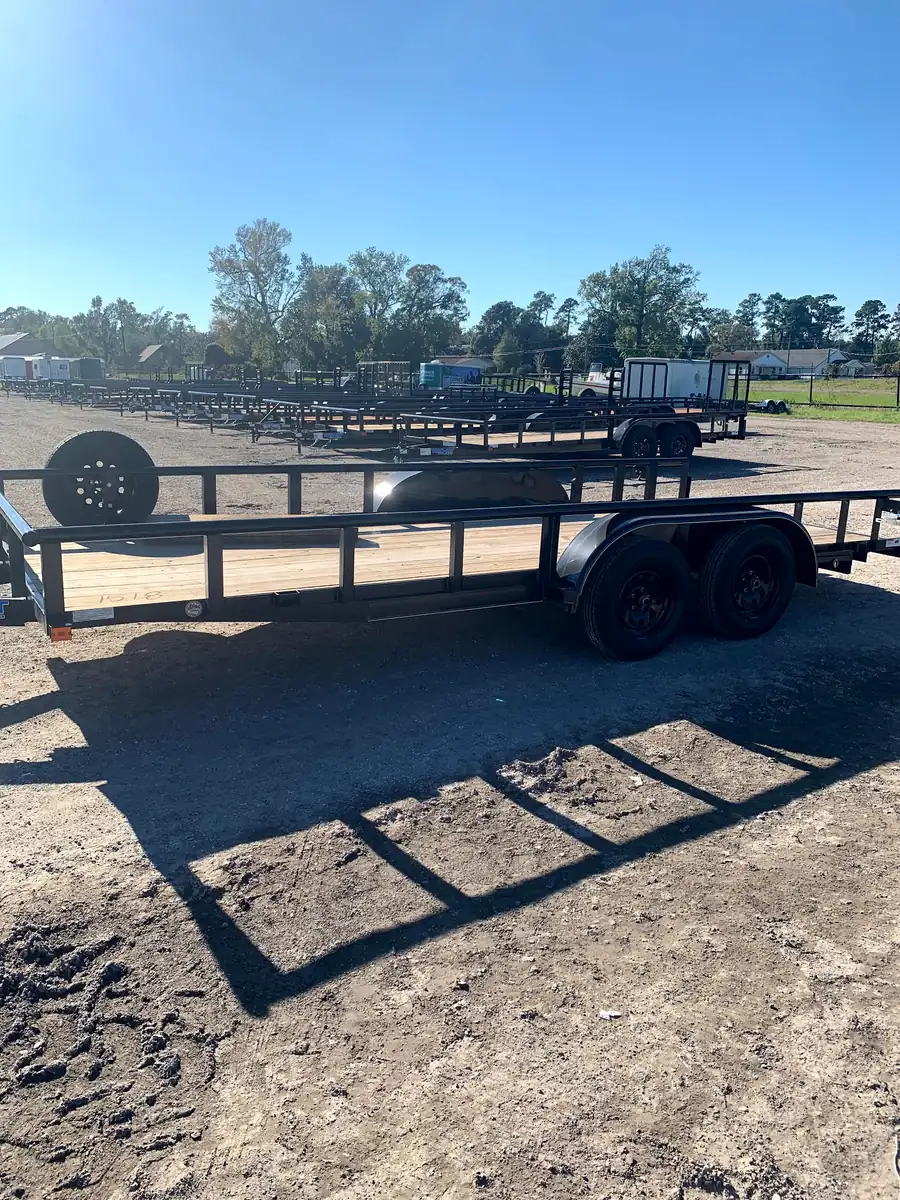
Everybody who walks onto a trailer lot in Southeast Texas asks some version of the same question: do I need two axles or will one do? The honest answer depends on what's actually going in the bed, not on what looks tougher sitting on the lot.
What a single axle trailer is actually good for
A single axle utility trailer, something in the 5x10 to 6.5x12 range, is the right call for mowers, four wheelers, a few yards of mulch, or a couple hundred pounds of feed and fence supplies at a time. It's lighter to tow, easier to back into a tight spot at the feed store or the boat ramp, and it costs less to insure and less to replace tires on. If most of what you haul weighs under 3,000 pounds and you're not doing it every day, a single axle keeps things simple.
Check the GVWR sticker before you assume a single axle covers you. It's printed on the trailer's VIN tag, usually near the tongue, and it's the maximum combined weight of trailer plus cargo, not just what the axle itself can theoretically hold. A single 3,500-pound axle trailer with a 3,500-pound GVWR has zero margin once you account for the weight of the trailer itself, so the real cargo capacity is usually 1,000 to 1,500 pounds less than the number on the sticker suggests. That's fine for a mower and some tools. It's tight for a loaded four wheeler with a rack and gear.
What the second axle actually buys you
Add a second axle and you're not just doubling tire count for looks. A tandem axle trailer rides flatter and tracks straighter at highway speed, especially loaded and especially in a crosswind coming off the marsh between Vidor and Port Arthur. If one tire blows on a tandem, the trailer stays level on the other three wheels on that side long enough to get to the shoulder. On a single axle, a blowout means the deck is on the ground. Tandem axles also carry a lot more GVWR, which matters if you're hauling a loaded stock trailer, a skid steer, or a boat with a full fuel tank and gear aboard.
Match the trailer to your truck, not just the load to the trailer
Tongue weight matters as much as total weight. A good rule of thumb is 10 to 15 percent of the loaded trailer weight sitting on the hitch. Load a tandem past what your half-ton can handle and you'll feel it in the sway before you feel it in the fuel bill. Above 3,000 pounds of trailer, most states require trailer brakes, and Cope's own repair shop works on brake controls all day, so if you're buying used and the brake controller looks like an afterthought, get it looked at before you tow with it, not after.
There's a maintenance tradeoff worth knowing about too. A tandem axle trailer has twice the bearings, twice the brake assemblies if it's brake-equipped, and twice the tires to keep an eye on. That's more points that can eventually need attention, which is exactly why Cope's repair shop treats axles and hubs as routine work rather than a rare visit. The payoff is that a tandem is far more forgiving if one of those points fails on the road, where a single axle problem often means you're stopped.
- Hauling one riding mower, a few bags of feed, or yard debris a couple times a month: single axle is plenty.
- Hauling ATVs, a loaded utility trailer every week, or anything over 3,000 pounds: go tandem.
- Towing at highway speed on I-10 with a full load: tandem tracks straighter and gives you a margin if a tire lets go.
- Tight driveway, small tow vehicle, occasional light loads: single axle is easier to live with day to day.
What's actually on the lot
Cope's carries both configurations, new and used, in Load Trail, Top Hat, Texas Bragg, Aluma, and Big Tex, from light 5x10 single axle utility trailers up through heavy-duty tandem pipe-top and dump trailers. Inventory changes by the week, so the fastest way to see what's sitting on the lot right now is to call or come by 24206 I-10 in Rose City, right on the frontage road between Vidor and Beaumont. Full categories are at /services/utility-trailers and /services/cargo-trailers.
If you're not sure which one fits what you actually haul, that's a five-minute conversation, not a sales pitch. Call 409-769-5388 during shop hours, Monday through Friday, 8 to 5, and describe what you're putting on it. They'll point you at the right axle count before you ever look at a price tag.
Cope's Trailers · (409) 769-5388
Call (409) 769-5388More articles
Trailer Maintenance on the Gulf Coast: What Salt Air Does to Bearings, Brakes, and Lights
A trailer that lives outside in the Golden Triangle ages differently than one kept in a barn. Here's what actually fails first.
Gooseneck, Bumper Pull, or Deckover: What Each One Is Actually For
The hitch style and the deck height decide what you can load and how your truck has to be set up. Here's the real difference.