Getting Your Trailer Ready for Deer Season and Hay Season
Between deer blinds going up and the last hay cutting of the year, this is the season that finds every weak spot in a trailer.
September 2, 2026 · 3 min read
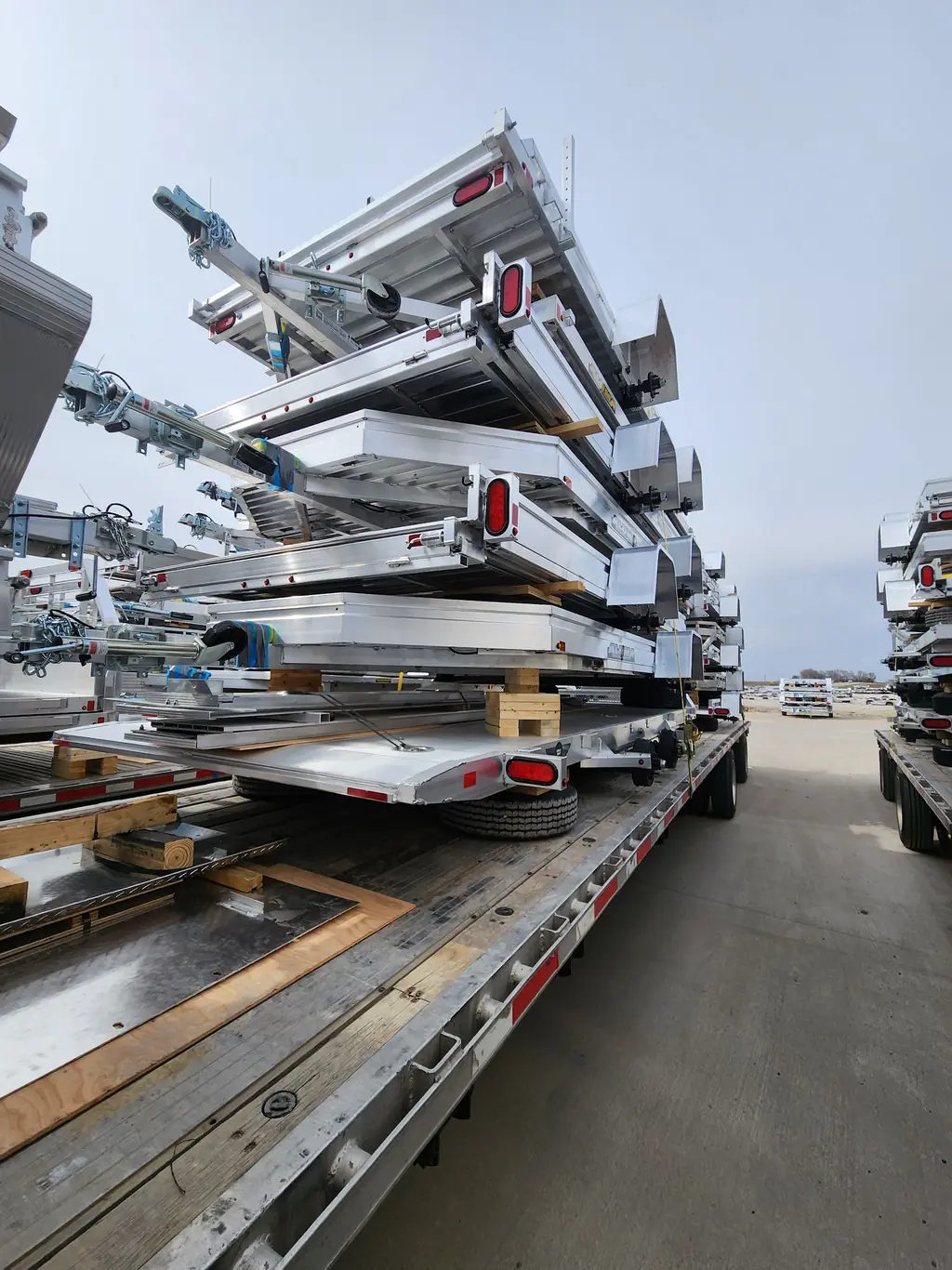
Late summer into fall is the busiest stretch of the year for anybody running cattle, cutting hay, or getting a lease ready before opening day. It's also the stretch where a trailer that's been sitting since spring gets asked to do real work again without much warning.
Hauling blinds and feeders
Elevated blinds, tower stands, and protein feeders are awkward loads: tall, top-heavy, and often wider than they look once they're strapped down. Cope's stocks Texas Hunter Products and Longhorn Outdoors blinds and feeders in a range of sizes, and if you're hauling one of these on a flatbed or deckover, tie-down points and a flat, rated deck matter more than raw capacity. Load a tall blind without enough load spread across the axles and you'll feel every crosswind on I-10 between here and the lease.
Strapping it down right
A tall blind or tower stand catches wind like a sail once it's on a trailer, so where you strap it matters as much as how many straps you use. Cross straps at both the top and the base keep it from walking side to side over rough road, and a load that's centered over the axles rather than hanging off the back tracks a lot straighter than one that isn't. If you're moving more than one piece of equipment at a time, a deckover or a larger utility trailer gives you the flat, obstruction-free bed that makes strapping an odd-shaped load like a blind actually manageable, rather than fighting fender wells the whole way.
Hay and round bales
A loaded hay trailer is deceptively heavy for its size, and it's exactly the kind of load where trailer brakes and tire condition actually get tested. If your utility or flatbed trailer has been parked since spring, check tire pressure and look for dry rot in the sidewalls before you load a full run of bales onto it. A tire that looks fine sitting still can fail under a loaded trailer at highway speed, and that's a bad place to find out.
Round bales run 800 to 1,200 pounds apiece depending on how tightly they're baled and how wet the hay was going in, which means three or four bales on a trailer can be close to its rated capacity before you've thought twice about it. Check the trailer's GVWR against a realistic bale count before you load it, not after it's stacked and strapped. A trailer rated for the load it's actually carrying tows predictably; one that's overloaded even slightly rides harsher, brakes worse, and puts more strain on bearings that are already working through the heat.
Cattle chutes and moving stock
Cope's now carries cattle chutes along with ArrowQuip wheel kits and Hanen AC-powered feeders, which matters if working cattle is part of your fall as much as deer season is. Moving a chute or a loaded stock trailer puts real weight on axles and hubs, exactly the components that take the most abuse from sitting outside all summer. Have the bearings checked before the season gets busy, not after a hub runs hot on the way to a sale.
For moving a chute itself, or livestock alongside it, a gooseneck stock trailer generally tows more predictably than a bumper pull once you're loaded with animals shifting weight around, which is part of why Cope's carries cattle and horse trailers in gooseneck configurations. If hauling capacity for the season ahead is the actual question, that's worth a look alongside the blinds and feeders at /services/cattle-horse-trailers and /services/utility-trailers.
The five-minute check before the season gets going
- Tire pressure and sidewall condition, especially on anything that's been parked since spring.
- Lights and the trailer connector, since a dead brake light on a loaded stock trailer is the kind of stop nobody wants.
- Bearings and hubs, if the trailer has been sitting or is about to carry more weight than it has all year.
- Tie-down points, if you're hauling something tall and top-heavy like a blind or a tower stand.
If anything on that list needs attention, Cope's takes drive-ins as well as appointments and in most cases gets trailers back out the same day, at 409-220-1308. And if the season means it's finally time to add a chute, a feeder, or another trailer to the operation, the farm and ranch and deer blind inventory is worth a look before the rush hits: /services/farm-ranch and /services/deer-blinds-feeders.
Cope's Trailers · (409) 769-5388
Call (409) 769-5388More articles
Single Axle or Tandem? How to Pick the Right Utility Trailer for What You Actually Haul
The sticker price isn't the question. What you're hauling, how often, and what your truck can legally stop are.
Trailer Maintenance on the Gulf Coast: What Salt Air Does to Bearings, Brakes, and Lights
A trailer that lives outside in the Golden Triangle ages differently than one kept in a barn. Here's what actually fails first.